
What goes into the cost of a turf project?
Square footage is a useful starting point. It is not the whole quote. Two yards of the same size can involve very different work before any turf is laid.
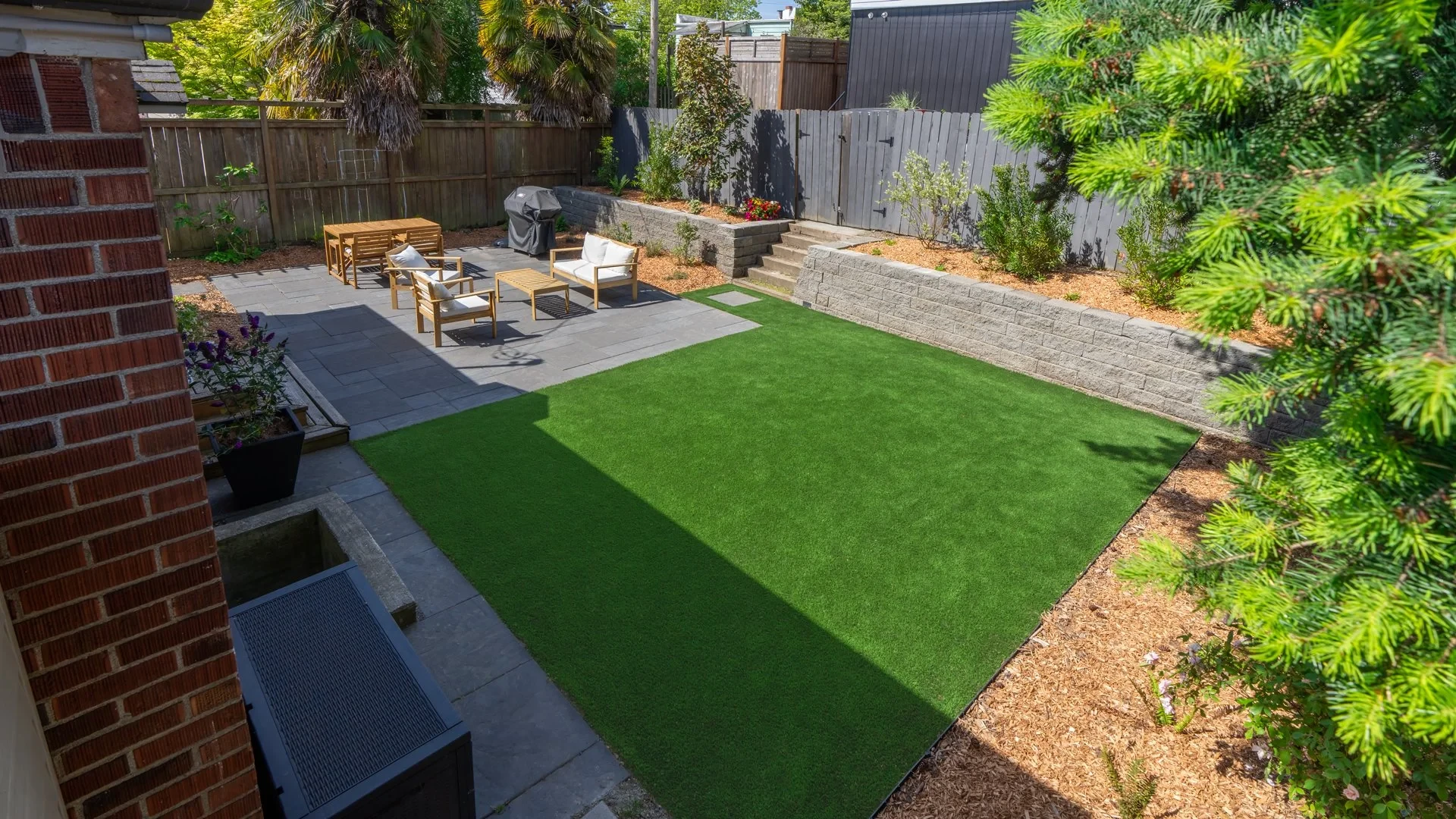
Get clear on what is being replaced.
Removing an existing lawn is different from removing concrete or rebuilding a poorly drained area. Ask what removal and disposal are included. If the site needs grading or drainage changes, those should be described in the estimate rather than left as a surprise.
Look below the surface.
Base preparation is part of the finished lawn, even though you will not see it. Ask how the proposed base relates to your soil, drainage and planned use. For pet areas or putting greens, ask which details differ from a general lawn installation.
Include the route into the yard.
Materials need a way in, and removed material needs a way out. Narrow gates, stairs and limited access can affect labor. Send photos of the access route as well as the project area when asking for an estimate.
Compare the same scope.
Check the turf product, infill, edging, seams, site preparation, cleanup and any landscaping included. Ask which items are optional and which are necessary for the proposed installation. A lower total is only useful if you understand what it leaves out.
Ask about life after installation.
Get the recommended maintenance routine and written warranty details for the actual products and installation. Pet use, heavy traffic and a golf green each create different care needs. Knowing those responsibilities helps you compare more than the initial price.
What to send with an estimate request.
A rough area measurement, your ZIP code, three or four photos, the intended use and any known water problems give the conversation a useful starting point. A written site-specific quote is more reliable than applying an unsourced price per square foot to your yard.